Research
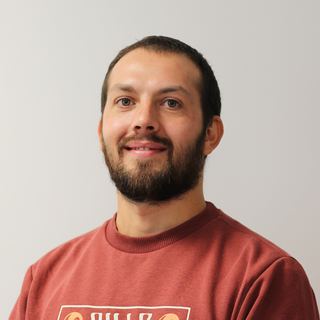
Germain Faity’s research focuses on human movement analysis, across biomechanics, motor control, behavioural neuroscience and digital health. It is organised along two lines.
Measuring physical activity in real life
The VAMOS project (Validity of Activity MOnitorS), conducted with Alexis Le Faucheur and Adrien Chanteau at the M2S laboratory, evaluates wearable accelerometers and the analysis methods used to characterise walking and physical activity in daily life. Germain Faity is in charge of data analysis and visualisation. Two articles were published in 2026, in Medicine & Science in Sports & Exercise and in Sports Medicine – Open. Others are in preparation, including a model estimating the energy cost of walking from EPOC.
Capacity, effort and physical activity behaviour
This second line extends his PhD on optimal control of movement after stroke, which showed that the reserve of joint torque determines movement coordination and motor compensations (Scientific Reports, 2021, Journal of Neurophysiology, 2024, Neurorehabilitation and Neural Repair, 2026). With Gaël Le Perf, he also proposed assessing paretic arm non-use through arm efficiency (Neurorehabilitation and Neural Repair, 2024). Since 2026, he has led the OPTIACTIV project (start-up grant from Rennes Métropole, €40k). The project studies how physical capacity, perceived effort, fatigue, energy expenditure and environmental constraints shape physical activity behaviour, in healthy people and in vulnerable populations. It relies on an integrated measurement platform: textile EMG, inertial sensors, 3D movement analysis and heart rate. Submitted projects aim to extend this programme.
Ecological transition
Germain Faity is co-founder and co-lead of the Transition ECO-STAPS project, supported by ANESTAPS, C3D STAPS and ACAPS. The project aims to integrate ecological transition issues into sport science degrees (STAPS) across France, through knowledge sheets for teachers and teaching resources.
At ENS Rennes, he has been a member of the Sustainable Development and Social Responsibility (DDRS) committee since 2025. He also co-represents the school in the Ecological and Social Transition in Higher Education (TES) working group of the University of Rennes.
During his PhD, he co-founded the Club des Chercheurs Verts (Green Researchers Club) at the EuroMov DHM laboratory in 2022, with Pauline Caille and Louis Hognon. The club assessed the laboratory’s carbon footprint with a reproducible method and reduction targets built collectively. The Club des Chercheurs Verts also organised a training day on environmental issues for staff of the sport sciences faculty in Montpellier (April 2023) and obtained €17k from the University of Montpellier for a climate introduction course for first-year students (2023-2024).
Education and positions
-
2025 – present
Associate Professor (Maître de conférences)
ENS Rennes, 2SEP Department, M2S Laboratory
-
2024 – 2025
Temporary Teaching and Research Associate (ATER)
ENS Rennes, 2SEP Department, M2S Laboratory
-
2024
Qualification as Associate Professor
French CNU sections 69 (neuroscience), 74 (sport sciences) and 91 (rehabilitation)
-
2019 – 2023
PhD in Human Movement Sciences (neuroscience, motor control)
EuroMov DHM, University of Montpellier, Nîmes and Montpellier University Hospitals
Thesis: optimal control of reaching after stroke. Supervisor: Denis Mottet. Co-supervisor: Jérôme Froger. Doctoral contract awarded by doctoral school 463 (ranked 1st of 6).
-
2018 – 2019
Master 2 in Movement Sciences and Techniques, motor control research track
EuroMov, University of Montpellier
Ranked 1st of 10, first-class honours. Thesis: a low arm force-to-weight ratio induces trunk compensations during reaching.
-
2017 – 2018
Master 1 in Physical Conditioning and Rehabilitation, research option
EuroMov, University of Montpellier
Ranked 1st of 42, upper second-class honours. Thesis: quantification of learned non-use after stroke.
-
2014 – 2017
Bachelor in Sport Sciences and Training, strength option
University of Montpellier
Triple speciality in gymnastics, physical conditioning and aquatic activities. Ranked 1st of 134, upper second-class honours.
Grants
-
2026
Scientific start-up grant for research equipment (OPTIACTIV)
Rennes Métropole
About €40k.
-
2022 – 2023
Climate introduction course for first-year sport science students
University of Montpellier, call for projects (Club des Chercheurs Verts)
€17k, obtained collectively.
-
2020
Internal call for projects of Nîmes University Hospital (OPTISTROKE)
Nîmes University Hospital
About €37k, score 17/20. Study record.
-
2019
Doctoral contract
Doctoral school 463 Human Movement Sciences
About €100k, ranked 1st of 6.
Teaching
At ENS Rennes, Germain Faity teaches biomechanics and motion capture (Qualisys, analysis in Python), statistics with R and signal processing. He also teaches the use of virtual reality for research and intervention in physical activity. He supervises internships and research theses in life and health sciences. He also teaches neuroscience and motor control in the fitness professions programme (DEUST Métiers de la forme) at Rennes 2 University.
He coordinates the 2SEP working group on a charter for the use of generative AI in student training, the department acting as a pilot for ENS Rennes.
Skills
Movement analysis
- 3D motion capture with markers (Qualisys, Vicon, Zebris)
- Markerless capture (Kinect)
- Graphic tablet
- Accelerometers
- Force sensors and force plates
Muscle activity
- Surface electromyography (EMG)
Programming and data analysis
- R (R Markdown, Shiny, Quarto)
- Python
- MATLAB
- Scilab
Open science
- Research data management
- Data management plans
- Sharing of code and data (OSF)
Languages
- French (native)
- Scientific English
Coaching and volunteering
-
2015 – 2021
Parkour coach and physical trainer
Montpellier Parkour and French Parkour Federation (volunteer)
Federal coaching certificates (levels 1 and 2), trainer for level 1. Design of a coaching course to help young clubs grow. Organisation of a national event (Weekend FPK 2019, Montpellier).
-
2017 – 2019
Coach and physical trainer in weightlifting, powerlifting, strength training and fitness
FORCE STAPS Montpellier (trainee), University of Montpellier sports service (employee)
Federal certificates (levels 1 and 2) in weightlifting, powerlifting, strength training and fitness, and level 1 in kettlebell.
-
2013 – 2017
Lifeguard and first aider
Nautilis aquatic centre (employee), Les Sauveteurs de la Charente (volunteer)
Articles in peer-reviewed journals
- 2026 Chanteau A., Faity G., Mahé G., Le Faucheur A. Accuracy in step counting is not accuracy in quantifying walking activity: a criterion validity study of wearable devices under free-living conditions. Medicine & Science in Sports & Exercise, 58(8).
- 2026 Chanteau A., Faity G., Mahé G., Sabia S., Le Faucheur A. Synthesis and validity of accelerometer devices and methods used in epidemiological studies of physical activity bout duration and health outcomes: a systematic review. Sports Medicine – Open, 12, 84.
- 2026 Faity G., Mottet D., Froger J., Delorme M. Neuromechanics of nonuse and compensation: implications for rehabilitation after stroke. Neurorehabilitation and Neural Repair.
- 2024 Faity G., Barradas V. R., Schweighofer N., Mottet D. Force reserve predicts compensation in reaching movement with induced shoulder strength deficit. Journal of Neurophysiology, 132, 470-484.
- 2024 Muller C. O., Faity G., Muthalib M., Perrey S., Dray G., Xu B., Froger J., Mottet D., Laffont I., Delorme M., Bakhti K. Brain-movement relationship during upper-limb functional movements in chronic post-stroke patients. Journal of NeuroEngineering and Rehabilitation, 21, 188.
- 2024 Le Perf G., Faity G., Mottet D., Muthalib M., Laffont I., Bakhti K. Beyond arm capacity in chronic stroke: evaluating paretic arm non-use through arm efficiency, a cross-sectional study. Neurorehabilitation and Neural Repair.
- 2023 Faity G., Sidahmed Y., Laffont I., Froger J. Quantification and rehabilitation of unilateral spatial neglect in immersive virtual reality: a validation study in healthy subjects. Sensors, 23, 3481.
- 2022 Faity G., Mottet D., Froger J. Validity and reliability of Kinect v2 for quantifying upper body kinematics during seated reaching. Sensors, 22, 2735.
- 2022 Pagnon D., Faity G., Maldonado G., Daout Y., Grosprêtre S. What makes parkour unique? A narrative review across miscellaneous academic fields. Sports Medicine.
- 2021 Faity G., Mottet D., Pla S., Froger J. The reserve of joint torque determines movement coordination. Scientific Reports, 11, 23008.
- 2021 Muller C. O., Muthalib M., Mottet D., Perrey S., Dray G., Delorme M., Duflos C., Froger J., Xu B., Faity G., Pla S., Jean P., Laffont I., Bakhti K. Recovering arm function in chronic stroke patients using combined anodal HD-tDCS and virtual reality therapy (ReArm): a study protocol for a randomized controlled trial. Trials, 22, 747.
Contact
ENS Rennes, Department of Sport Sciences and Physical Education, Campus de Ker Lann, Avenue Robert Schuman, 35170 Bruz, France